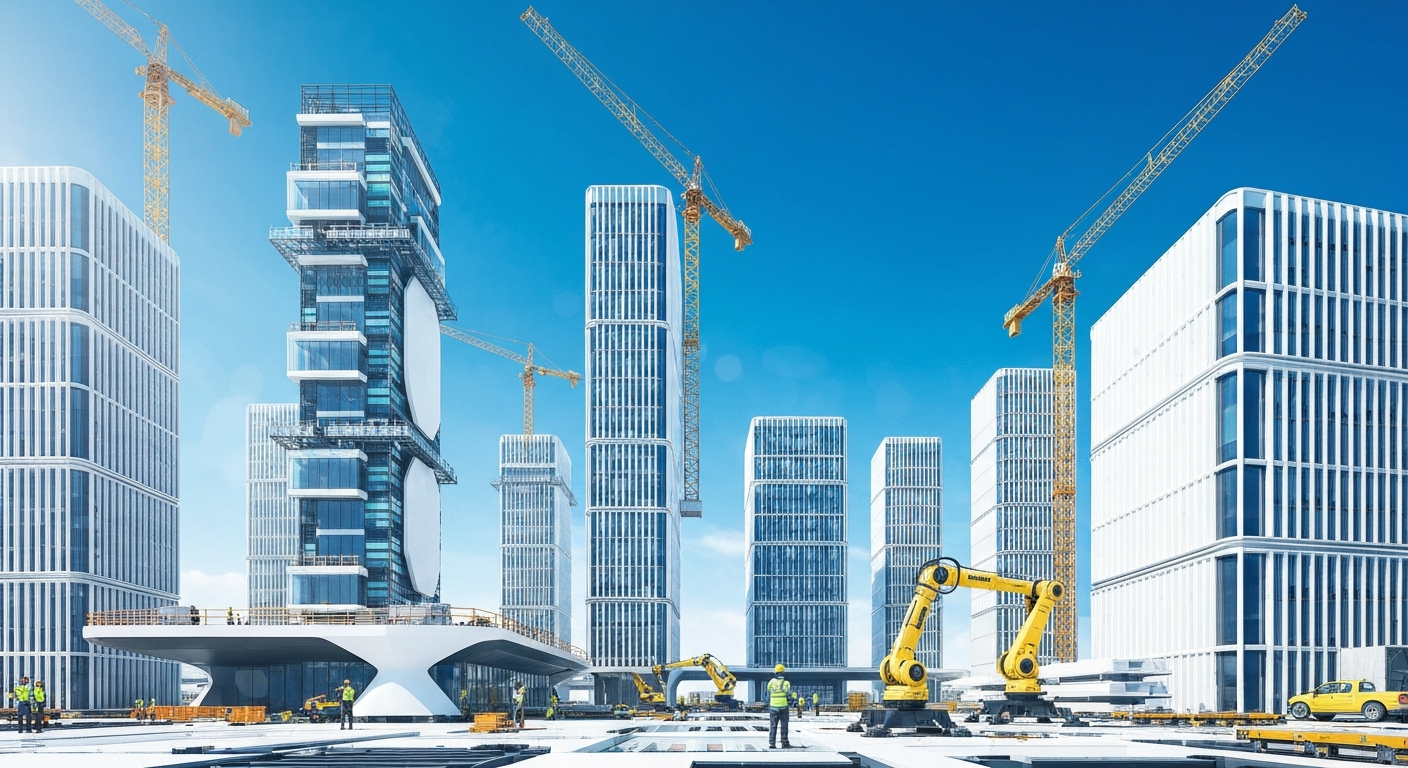
The skyline is constantly evolving, a testament to humanity's endless drive to build, innovate, and expand. For centuries, construction has been a cornerstone of civilization, yet the methods often remained rooted in tradition. Today, however, we stand on the precipice of a revolution. The future of construction isn't just about bigger or taller buildings; it's about smarter, more sustainable, and incredibly efficient ways of bringing our built environment to life. From groundbreaking technologies to a renewed focus on environmental stewardship, let's explore the exciting trends that are redefining how we build the world around us.
The Rise of Automation and Robotics
Imagine construction sites where repetitive tasks are handled by tireless machines, and complex maneuvers are executed with pinpoint precision. This isn't science fiction; it's the near future. Automation and robotics are set to transform the industry:
Robotic Bricklayers: Machines like Hadrian X can lay thousands of bricks an hour, far outpacing human capabilities, improving speed and reducing labor costs.
Drones and Autonomous Vehicles: Drones are already used for site mapping, progress monitoring, and safety inspections, offering unparalleled aerial insights. Autonomous excavators and dump trucks are poised to take over hazardous and strenuous tasks.
3D Printing: From printing entire houses in a matter of days to creating intricate components, 3D printing in construction (often called 'additive manufacturing') promises faster build times, reduced material waste, and the ability to create complex geometries not possible with traditional methods.
Sustainable Building: Constructing a Greener Tomorrow
As awareness of climate change grows, the construction industry is under increasing pressure to reduce its environmental footprint. The future of construction is undeniably green:
Eco-Friendly Materials: Expect to see a wider adoption of materials like engineered timber (cross-laminated timber or CLT), self-healing concrete, recycled steel, and bio-based insulation.
Energy Efficiency: Buildings will be designed and constructed to minimize energy consumption, incorporating smart windows, advanced insulation, and integrated renewable energy systems like solar panels and wind turbines.
Circular Economy Principles: Emphasis will be placed on designing buildings for deconstruction, allowing materials to be reused or recycled rather than sent to landfills.
Net-Zero and Regenerative Design: The ultimate goal is to create buildings that produce more energy than they consume and even contribute positively to their local ecosystems.
Modular and Prefabricated Construction: Building Off-Site
The concept of building components in a factory setting and then assembling them on-site isn't new, but its sophistication and scale are rapidly expanding. Modular construction offers significant advantages:
Speed and Efficiency: Factory production can occur simultaneously with site preparation, significantly cutting down overall project timelines.
Quality Control: Controlled indoor environments allow for higher precision and quality standards, reducing defects.
Waste Reduction: Factory settings optimize material use, leading to less waste compared to traditional on-site construction.
Reduced Disruption: Less on-site work means less noise, traffic, and environmental impact in surrounding communities.
Digital Transformation: The Smart Construction Site
The digital revolution is sweeping through construction, connecting every aspect of a project:
Building Information Modeling (BIM): More than just 3D drawings, BIM creates a comprehensive digital representation of a building, integrating design, construction, and operational data. This facilitates better collaboration, clash detection, and lifecycle management.
Artificial Intelligence (AI) and Machine Learning (ML): AI can optimize schedules, predict potential risks, analyze vast datasets for design improvements, and even power predictive maintenance for equipment.
Internet of Things (IoT): Sensors on equipment, materials, and even workers can provide real-time data on performance, location, and safety conditions, creating truly 'smart' construction sites.
Digital Twins: A digital twin is a virtual replica of a physical asset (like a building or infrastructure). It receives real-time data, allowing for simulations, predictive maintenance, and optimized operation throughout the asset's lifespan.
Enhanced Safety and Workforce Development
Beyond efficiency, technology is also making construction a safer industry. Robotics can handle dangerous tasks, while wearables for workers can monitor vital signs, detect hazards, and even prevent accidents. Virtual and augmented reality are becoming invaluable tools for training, allowing workers to practice complex tasks in a risk-free environment. This shift also means a new demand for skilled professionals proficient in technology, data analysis, and advanced construction techniques, fostering a more diverse and technologically adept workforce.
Conclusion: A Bright Future on the Horizon
The construction industry is at the cusp of an unprecedented transformation. By embracing automation, prioritizing sustainability, leveraging digital technologies, and fostering a skilled workforce, we are not just building structures; we are building a more efficient, safer, and environmentally responsible future. These innovations promise to deliver higher quality projects, reduce costs, and accelerate the pace of development, ultimately shaping better communities and a more resilient world for generations to come. The future of construction isn't just about what we build, but how we build it, and the outlook is remarkably optimistic.